Dispatch One — The Return Dilemma
Jurahiya Camp, West Beqaa Valley, Lebanon · October 2025
Full story published on Middle East & Africa Institute for Strategic Studies website
In Lebanon’s Beqaa Valley, the war in Syria feels both distant and immediate. It is across the border, but its consequences remain in the shelters families repair, the classrooms children attend, and the conversations about whether there is anything left to return to. For Syrians who have spent years in displacement, home is both a place they remember and a practical question they cannot yet answer: where can they live, find work, and give their children a future?
When I visited Jurahiya, an informal Syrian refugee settlement near Al Marj, in October 2025, ten months had passed since the fall of Bashar al-Assad’s government. That political transformation had reopened the possibility of return. It had not resolved what return would require. Families were weighing news from Syria against the lives they could sustain in Lebanon, where economic hardship made remaining an increasingly difficult choice.
Outside one shelter, four boys worked with a torn tarp while their father repaired the rear wall. Corrugated metal, sheeting, and concrete fragments formed the structure around them. It was an ordinary task with an unresolved question behind it: how much do you invest in a place you may leave, and how do you stop maintaining the only home you currently have? Whatever the family’s future held, the wall still needed repairing.
This was the tension running through my reporting in Jurahiya and at the Jusoor Education Center. Return was a political objective, a subject of humanitarian programming, and a possibility discussed between families. But for the people weighing it, the decision came down to specific conditions. Was their house standing? Could they earn a living? Could their children continue learning? What would happen if they returned and found that the conditions they needed were still missing?
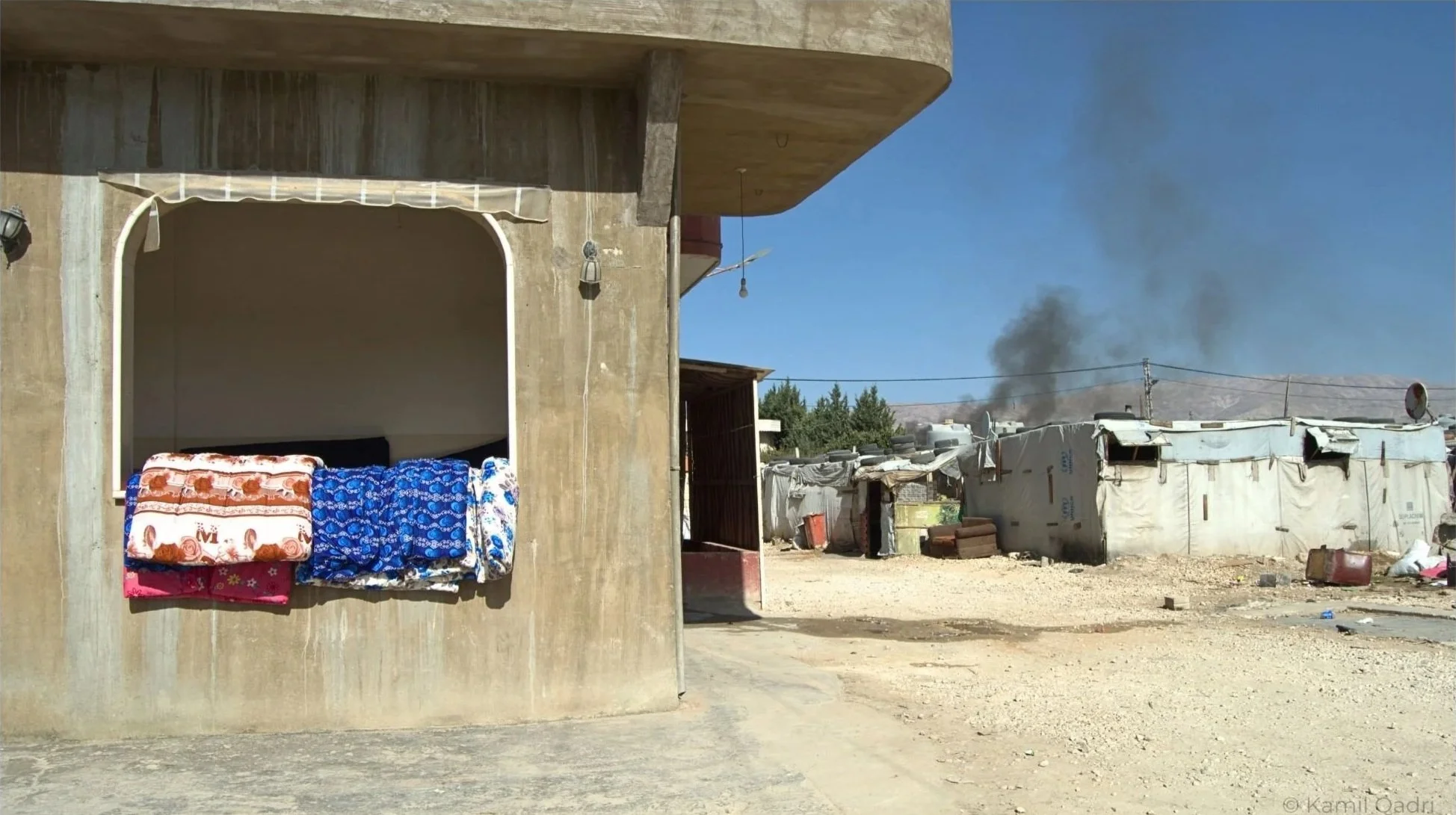
In Jurahiya, the aftermath of war was visible in this distance between political possibility and material reality. Families continued repairing shelters, children attended lessons, and people assessed what they heard from across the border. Their decisions were shaped by hope, exhaustion, and the resources available to them. The question was whether the promise of a changed Syria would become tangible enough to build a life around—and what would happen to those still waiting.
“Syria is not ready for us to go back to,” said Faraj, 23, from Aleppo.
His assessment sat alongside other, more hopeful accounts. Some people I spoke with expressed trust in the new government and hoped to return once their homes were rebuilt. Others described having little to go back to: damaged housing, uncertain employment, and doubts about whether political change would produce lasting security. These positions did not fit neatly into support for or opposition to Syria’s new leadership. Hope could coexist with hesitation. Wanting to return did not mean being able to.
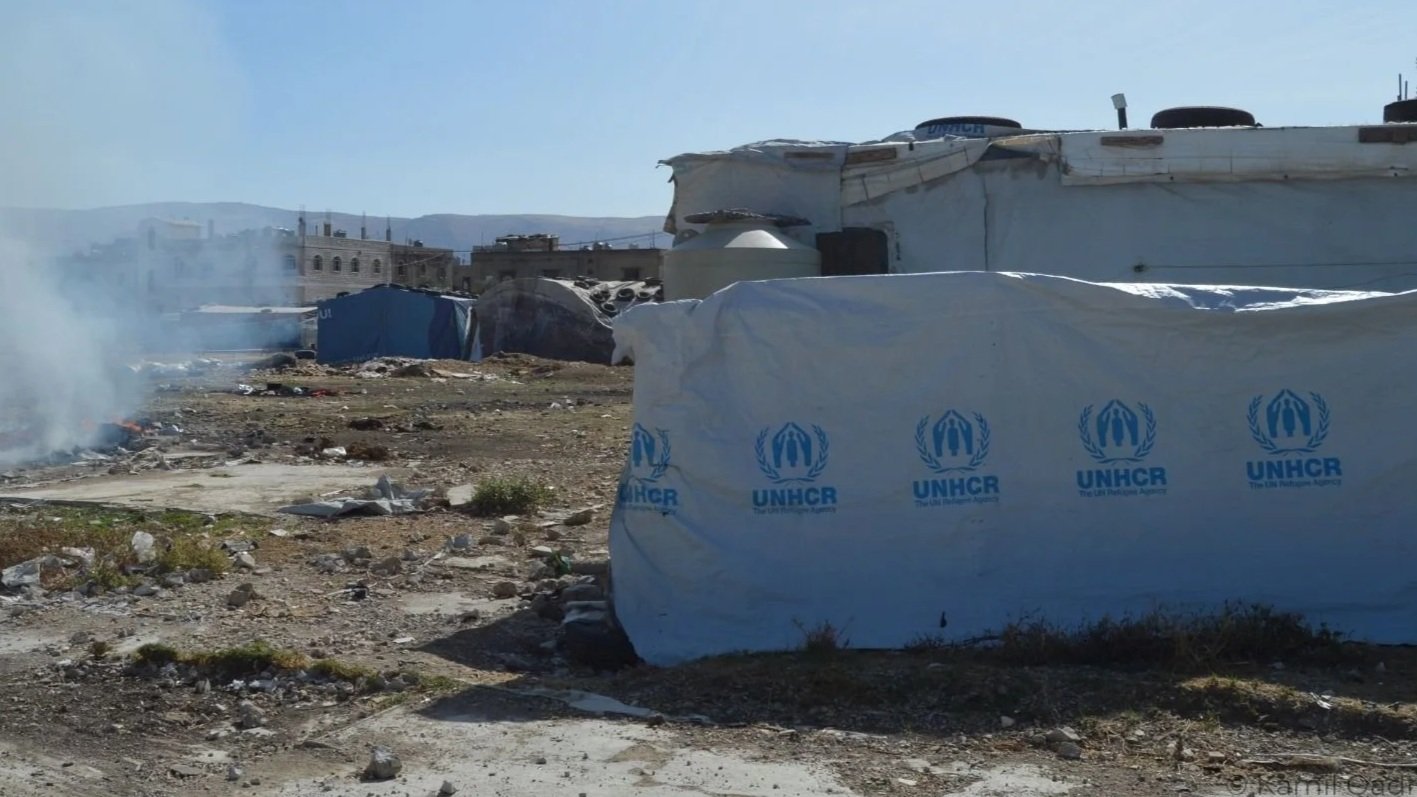
“Many Syrians still have hope. We see a real future,” said Rania, a teacher at the Jusoor Center.
At the center, the question of Syria’s future existed alongside the immediate work of educating children in Lebanon. For young people, the consequences of displacement accumulate while adults and institutions debate what comes next. Schooling, friendships, and the possibility of work cannot simply be put on hold until a country is declared ready to receive them.
My interviews also exposed a gap between return policy and the people it was intended to reach. Several interviewees had no prior awareness that UN-supported return assistance existed. Others knew of assistance but considered it too limited to change their decision. Those conversations did not establish how widely the programs were understood across the settlement. They did reveal how a policy can exist on paper without becoming a meaningful option for a family.
For authorities in Damascus, returning families can serve as evidence that the country is stabilizing. But a border crossing alone cannot establish whether someone has returned to a sustainable life. Equally, remaining in Lebanon should not automatically be read as a rejection of the new government. A family may believe in Syria’s future and still lack a roof under which to live there.
