Bucharest Sector IV, Romania - December 15, 2025
An on-the-ground look at how prolonged displacement is complicating post-war return and recovery for Ukraine. Full story currently being pitched to international outlets.
Dispatch Two -“Ukraine’s Lost Generation”
For families who imagined exile as temporary, those attachments raise difficult questions. Returning would mean more than crossing a border. It could mean leaving behind the places where their children have grown up.
Ukraine’s reconstruction will depend on people as well as infrastructure: teachers, professionals, and young adults whose skills will help sustain recovery. Some are now studying and working abroad, building ties that could make return a more complicated decision.
Mariia belongs to that generation. Her education is Ukrainian. Her daily life is Romanian. Her work already supports other displaced families.
For Hanna, return remains tied to belonging rather than certainty. “Home is home,” she says, while acknowledging that many people will not go back.
Others are more direct. Alena, 18, from Kherson, arrived in Romania in April 2022 after leaving Ukraine at fourteen. She has friends, a boyfriend, and plans to study music. She is learning Japanese and wants to move to Japan.
“My adolescence happened here,” she says.
Whether young Ukrainians return will depend on safety and opportunity, but also on what returning would require them to leave behind. The longer displacement continues, the more those decisions involve lives already taking shape elsewhere.
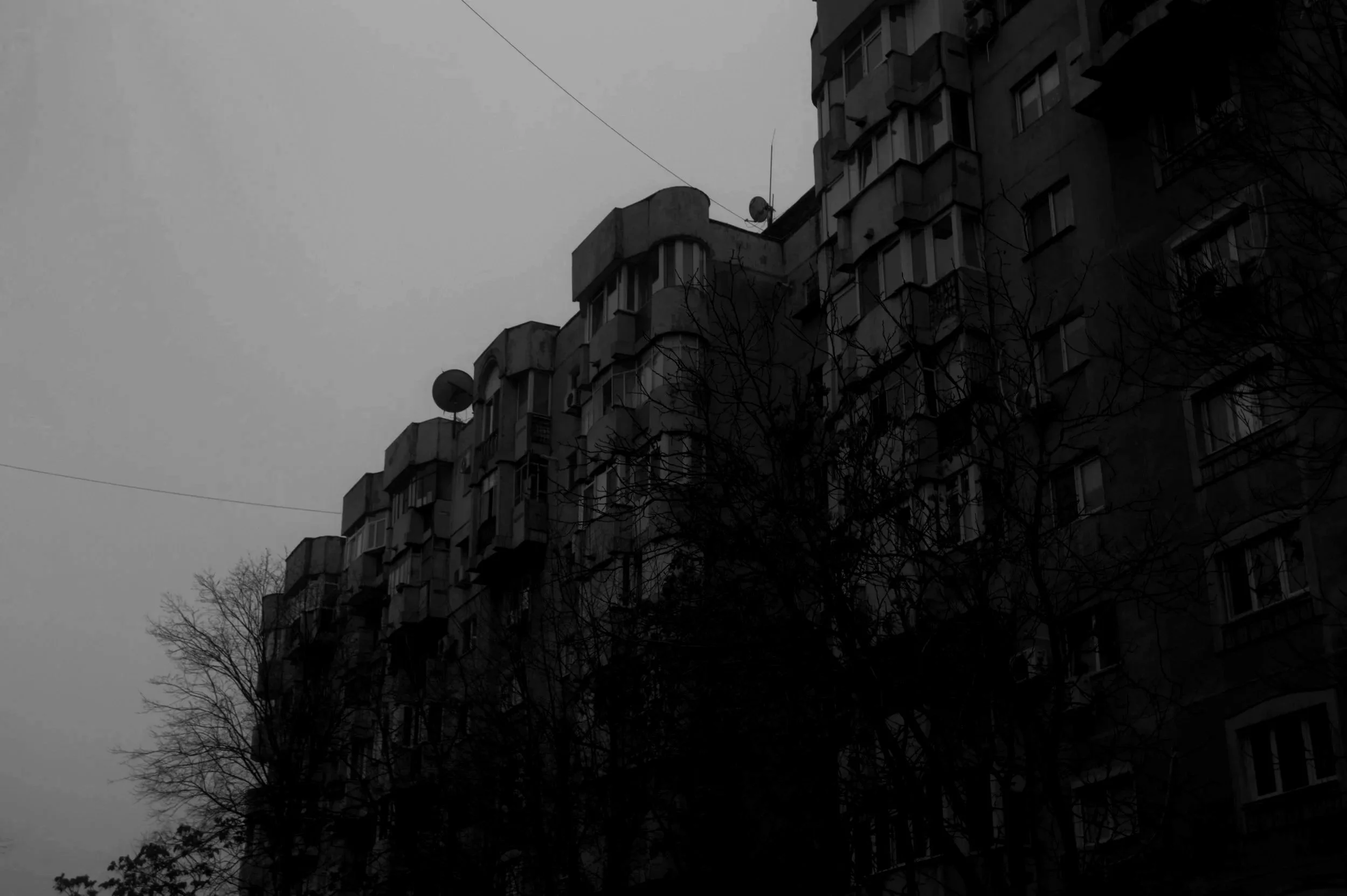
Apartment blocks in Sector IV, Bucharest, now home to many Ukrainian refugees.
Nearly four years into the war, young Ukrainians in Bucharest are building lives they once expected to be temporary. Teenagers who fled in their early teens are approaching adulthood, making decisions about education, work, and relationships that may take them further from returning home.
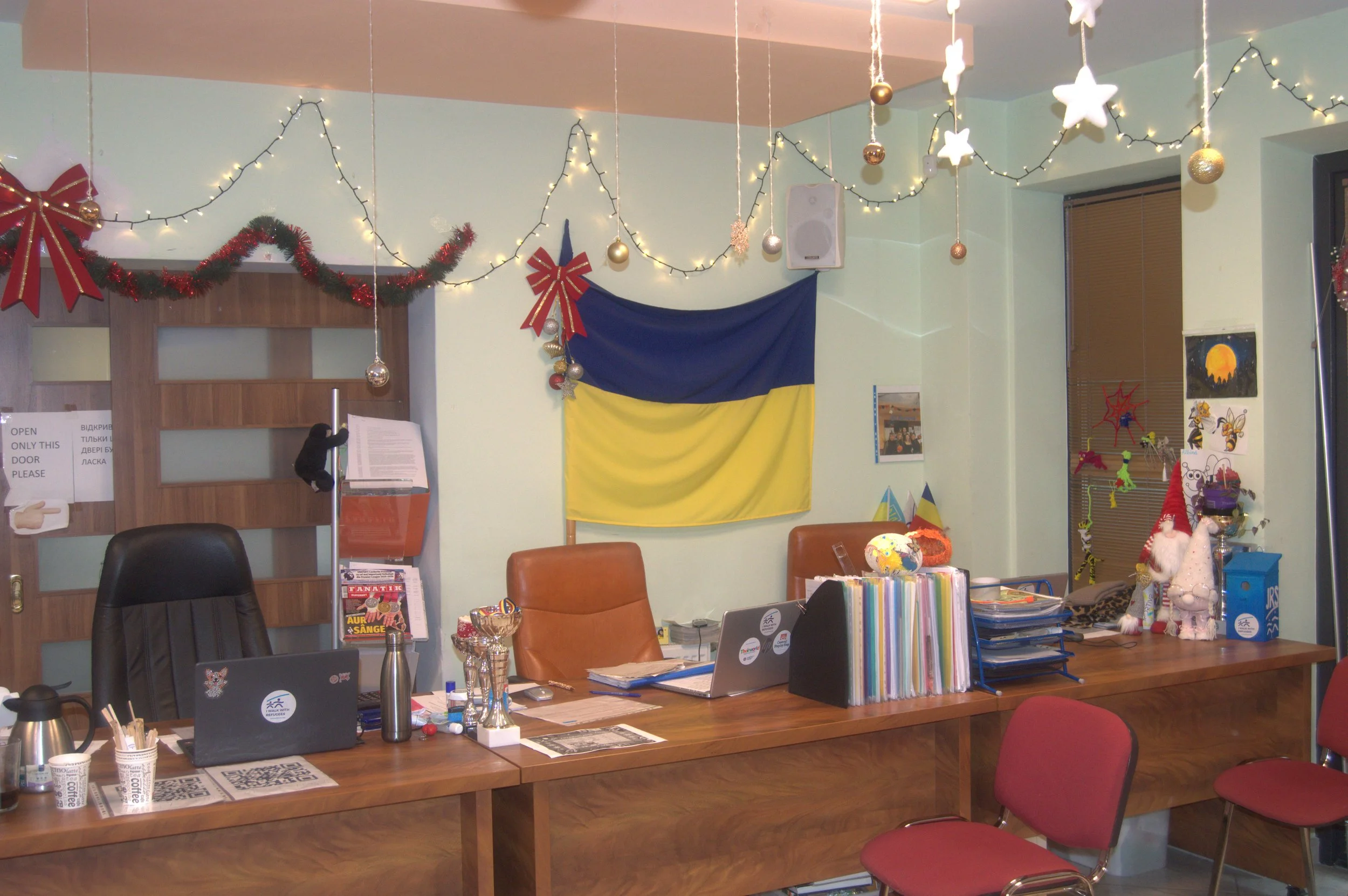
At the Jesuit Refugee Service (JRS) in Romania, education and language programs help displaced children navigate those years. Ukrainian teachers support children through kindergarten activities, language classes, and music lessons.
Mariia, 20, from Odesa, teaches a classroom of 25 children while pursuing an international relations degree online through her university in Ukraine. I sat down with her in Bucharest to discuss life in prolonged displacement.
“Here I volunteer—I help with translations, documents, and I teach English to children.”
Her education remains rooted in Ukraine, but her daily responsibilities are in Romania. Asked about return, Mariia says she does not think everyone who grew up abroad will go back. New friendships, languages, and routines have given young people reasons to imagine their futures elsewhere.
Building a life in Romania, however, does not mean feeling fully accepted.
Hanna, 16, also from Odesa, has lived in Romania since March 2022. She says people in Bucharest have told her to “go back to Ukraine.”
“There is bullying,” Hanna tells me. “Teachers say bad things. Ukrainian children are sometimes separated in class.”
Describing her younger sister’s public elementary school, Hanna says Romanian children sit toward the front while Ukrainian students sit at the back.
Mariia also describes hostility, including reports of damage to Ukrainian cars and unequal treatment in the rental market. “Sometimes one room costs twice as much just because you are Ukrainian,” she says.
She believes some resentment comes from a perception that Ukrainians receive advantages unavailable to Romanians.
“They don’t understand that we also had normal lives in Ukraine.”
These accounts complicate the idea that remaining abroad is a straightforward choice. Young people can face exclusion in the same places where they are forming friendships, gaining qualifications, and beginning to establish independent lives.
A Ukrainian flag hangs behind the Jesuit Refugee Service desk, Bucharest
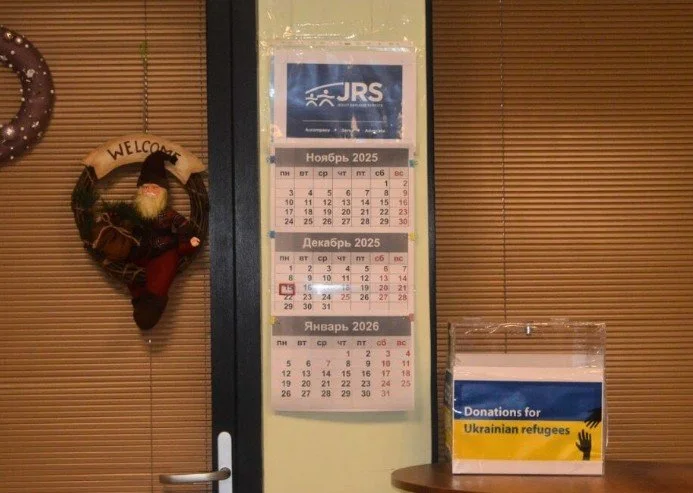
A donation box for refugees sits infront of a calendar at JRS Bucharest